
American Country Style
American Country style is cozy, comfortable and inviting.
It blends Folk Art and American heritage by using traditional materials like textiles, lace, wood floors and brick to create simple and relaxed interiors.
Whether you picture yourself putting up preserves on a cast-iron stove or sipping a highball in a knotty-pine lodge, American Country design means unpretentious comfort and natural beauty.


It takes a while to arrive, following a narrow country road that bends past fields and stone walls, easing you into a slower rhythm as much as a different place. When you pause at a roadside market or an old filling station, even the details feel familiar and enduring—weathered signage, hand-painted lettering, pumps or counters that look as though they have been there for decades.
Along the way, clapboard barns sit low against the land, silos and water towers rising gently above them, softened by age and use. There is the distinct sense that life here has changed gradually, shaped more by season and necessity than by fashion, and that the landscape itself still sets the pace.
American Country style lingers most comfortably on small farms, in village houses, and in quiet rural retreats. It lives in the plainspoken grace of a country town, in the wide porches and worn thresholds of a century-old inn, and in interiors shaped by hand, habit, and purpose rather than display.
Whether you imagine yourself putting up preserves on a cast-iron stove, folding laundry beside an open window, or sipping a highball in a knotty-pine sitting room, American Country design is always about ease. It favors honest materials, familiar forms, and the kind of natural beauty that invites you to stay awhile—unpretentious, welcoming, and deeply rooted.
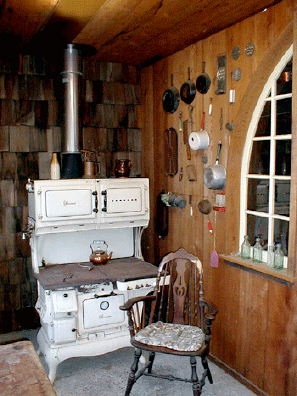
Woodwork is a good place to begin. Walls and floors of warm, plain pine boards, unfinished for a true pioneer look or stained for a more refined feeling, provide a backdrop for whatever homespun furnishings and accessories catch your fancy.
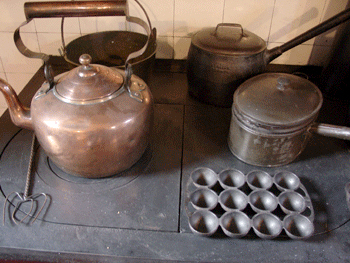
Practical items like old-fashioned cookware, rag rugs and antique quilts are both beautiful and useful. Old farm and household implements have a unique beauty, like the horse-drawn plow. A butter churn, a grain mill, an antique meat grinder, and, of course, a copper kettle are all good accent choices. Restored vintage ranges and refrigerators have become more easily available in recent years, and nothing says country like a cast-iron potbelly heating stove.
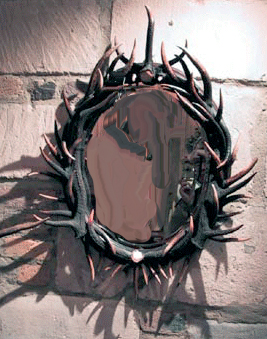
If you’re looking more for a turn-of-the-century “Great Camp” and less for a pioneer homestead, try antlers above a stone fireplace, knotty pine paneling, and (for the unsqueamish) hunting trophies and motifs.
A generous portion of luxury is appropriate: exquisite lace curtains, a beautifully restored old upright piano for evening sing-along. Don’t forget cozy nooks with leather armchairs in which to curl up with a book, and, if space permits, multiple fireplaces. And bearskin rugs may have fallen out of favor, but plush carpets scattered across wood or stone floors will keep out the chill mountain air.
Special Feature
English Country Style
In the English countryside, pretty villages dot rolling hills and cobblestones line narrow medieval streets. Come in through the garden gate, and you'll find a steep thatched roof overhanging ancient leaded glass windows. Old garden roses creep around the carved oak door. The grounds, whether a picturesque cottage garden or the rolling parkland of the local manor house, are lovingly cared for. Everything is fresh, tidy, and welcoming.
Discover more about English Cuuntry Style.

Step-by-step Tutorial
Painted Scrolls on Ceiling Beams
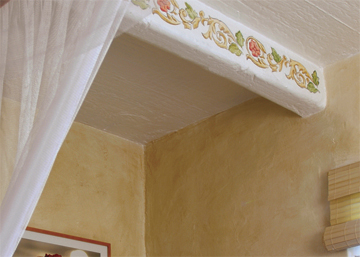
The charm of painted scrolls on ceiling beams needs no introduction. This decorative accent is a delightful addition to any room. And though beams are common elements in many interiors, rarely do we see them used as a focal point for decorative applications. Whether you enjoy the old world charm of Italy, or the contemporary flair of a San Francisco loft space, these techniques can be adapted to suit the most creative inspiration.
Learn how to paint scrolls on ceiling beams and more!
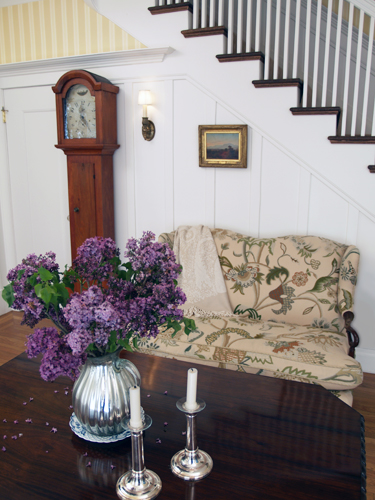
Early American Style
Colonial Americans drew inspiration from their European heritage. Current design styles would filter across the ocean and become reinvented in early America. Proportion and scale took reign over ornamentation; a neutral color palette of gray blues, greens, and rose pinks is readily apparent.
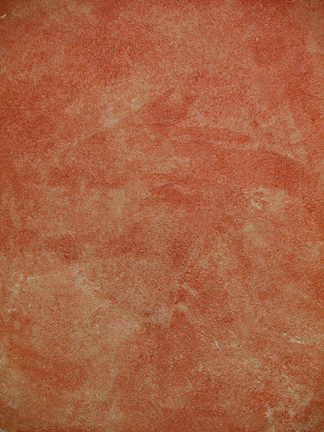
Stucco Rustico - Aged Plaster
Stucco Rustico is a traditional interior and exterior textured plaster associated with rustic Tuscan environments. Loved for its ease of application and the natural, organic glazed appearance that results when using mineral based plasters and glazes.

The Rustic Color Palette
The Rustic Style color palette falls within a distinct range of color tones and is essential in creating a successful Rustic interior. By using the appropriate color tones you can create a variety of design styles ranging from Period and Historic, regional or thematic.
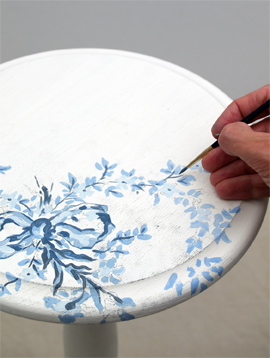
Painted Floral Details
Floral patterns used as accents in fabrics and furniture are common place details in the English Country home. These graceful and organic patterns complement the cozy interior of this style and work particularly well with lace window treatments, an heirloom tea service set and the natural and rustic charm of wooden ceiling beams and slightly irregularly textured walls.