
Robert Adam Style
Elegance and Fluidity in Neoclassical Design
A Timeless Legacy in Architecture and Interior Design
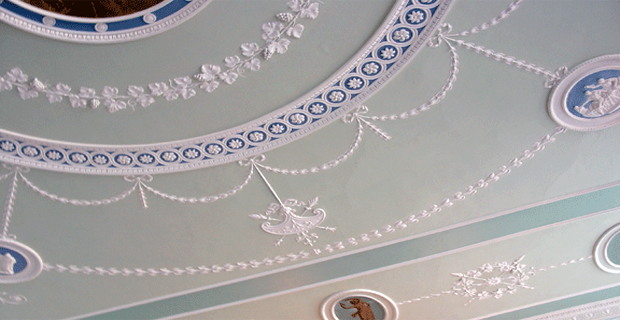
The Robert Adam Style is a refined and elegant interpretation of Neoclassical design, developed by the celebrated British architect Robert Adam (1728–1792). Adam revolutionized 18th-century architecture and interior design, introducing a style remarkable for its grace, fluidity, and harmonious detail. His influence extended across England and America, where his style became the foundation of the Federal style, shaping domestic architecture from the 1790s to the 1830s
Adam’s work is distinctive in its decorative sophistication and classical inspiration, incorporating elements of ancient Roman, Greek, Byzantine, Italian Baroque, and Etruscan styles. Unlike the rigid symmetry and formality of earlier Georgian and Palladian architecture, Adam introduced a sense of movement and lightness, using curved lines, ovals, and intricate ornamentation to bring a new level of artistry to interior spaces.
The Influences Behind Adam’s Revolutionary Style
Robert Adam’s artistic philosophy was profoundly shaped by his formative Grand Tour of Europe—a traditional journey undertaken by young architects and scholars of the 18th century. During his extended travels through Italy, Greece, and the Dalmatian coast, Adam immersed himself in the study of Roman ruins, ancient temples, and classical interiors. Rather than copying antiquity outright, he focused on understanding proportion, rhythm, ornament, and the emotional impact of space.
Adam was particularly inspired by the excavations at Pompeii and Herculaneum, as well as the refined interiors of ancient Roman villas. These discoveries revealed a lighter, more decorative interpretation of classical design—one that contrasted sharply with the heavy Palladian traditions dominating Georgian England at the time.
Upon returning to England, Adam formed a highly influential partnership with his brother James Adam. Together, they established a prolific architectural and decorative firm that integrated architecture, interiors, furniture, plasterwork, and color into unified compositions. This holistic approach—what Adam referred to as the “movement” of a space—was revolutionary and would come to define Georgian Britain and strongly influence early American Federal-style design.
Rejecting the rigid symmetry and severity of earlier Georgian architecture, Adam embraced elegance, fluidity, and refined decoration. His approach introduced several defining characteristics:
• Curvilinear forms, with ovals, circles, and softened geometry appearing in room layouts, ceiling plans, niches, mirrors, and furniture details—creating a sense of movement and visual continuity.
• Eclectic classical influences, skillfully blending Greek, Roman, and Etruscan motifs with subtle references to Byzantine and Baroque ornamentation, all filtered through a distinctly modern 18th-century lens.
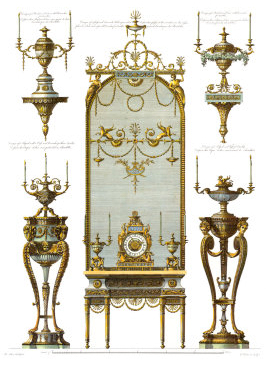
• A refined explosion of ornament, featuring swags, garlands, urns, medallions, ribbons, rosettes, scrolls, and vine motifs. These elements were never applied arbitrarily; instead, they were carefully scaled and balanced within strict classical proportions, resulting in interiors that felt richly decorative yet remarkably restrained.
The result was a new architectural language—one that fused archaeology, artistry, and innovation. Adam’s style did not merely revive classical ideals; it reimagined them, creating interiors that were light, graceful, and harmoniously unified, setting a lasting standard for neoclassical design.
Signature Elements of the Adam Style
Adam’s designs extended beyond architecture to furniture, textiles, and decorative arts, creating a holistic style that transformed interior spaces.
Architectural Features & Ornamentation
Adam Style interiors are distinguished by their refined architectural detailing and carefully balanced ornamentation. Rather than relying on heavy mass or bold contrasts, these interiors achieve elegance through lightness, precision, and classical harmony.
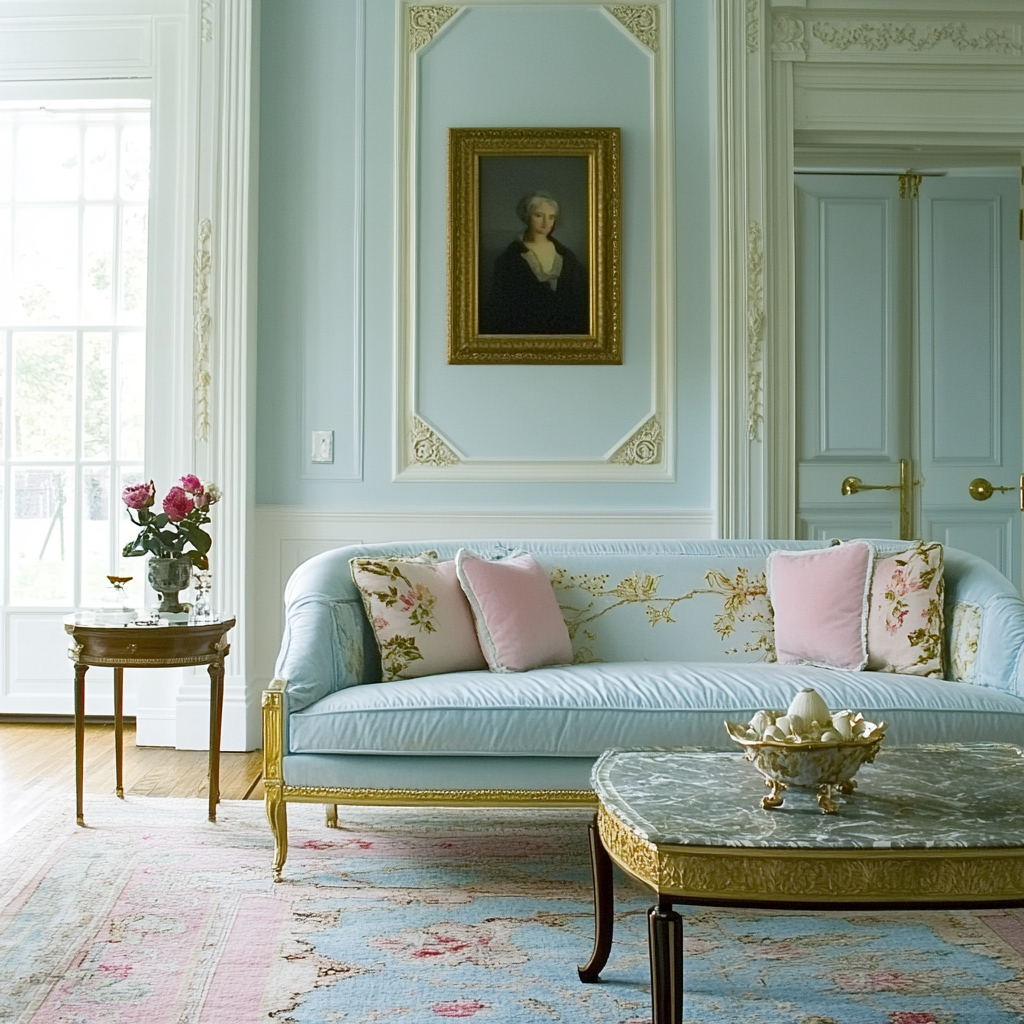
• Delicate stucco reliefs are a defining feature, often cast in low relief and arranged in symmetrical compositions. These decorative elements were traditionally finished in soft pastel tones—such as pale blues, celadon greens, blush pinks, and warm stone hues—or selectively gilded to introduce subtle highlights and a sense of understated luxury.
• Classical architectural elements, including slender columns, pilasters, friezes, and entablatures, are seamlessly integrated into walls, door surrounds, alcoves, and fireplace mantels. Unlike earlier Georgian interiors, these features are scaled with restraint, emphasizing proportion and rhythm rather than monumentality.
• Ceilings play a central decorative role in Adam Style interiors. Intricately designed with geometric layouts, interlocking ovals, rosettes, and stylized floral motifs, ceilings often serve as the visual centerpiece of a room. These compositions add depth, movement, and a sense of architectural continuity between the vertical and horizontal planes.
Together, these architectural features create interiors that feel unified and intentional—spaces where ornament, structure, and surface treatment work in concert to produce a refined yet inviting expression of Neoclassical design.
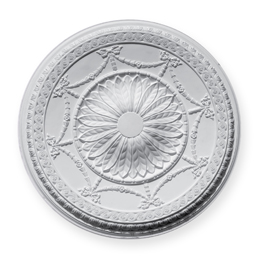
Discover more architectural plaster features.
Furniture & Decorative Arts
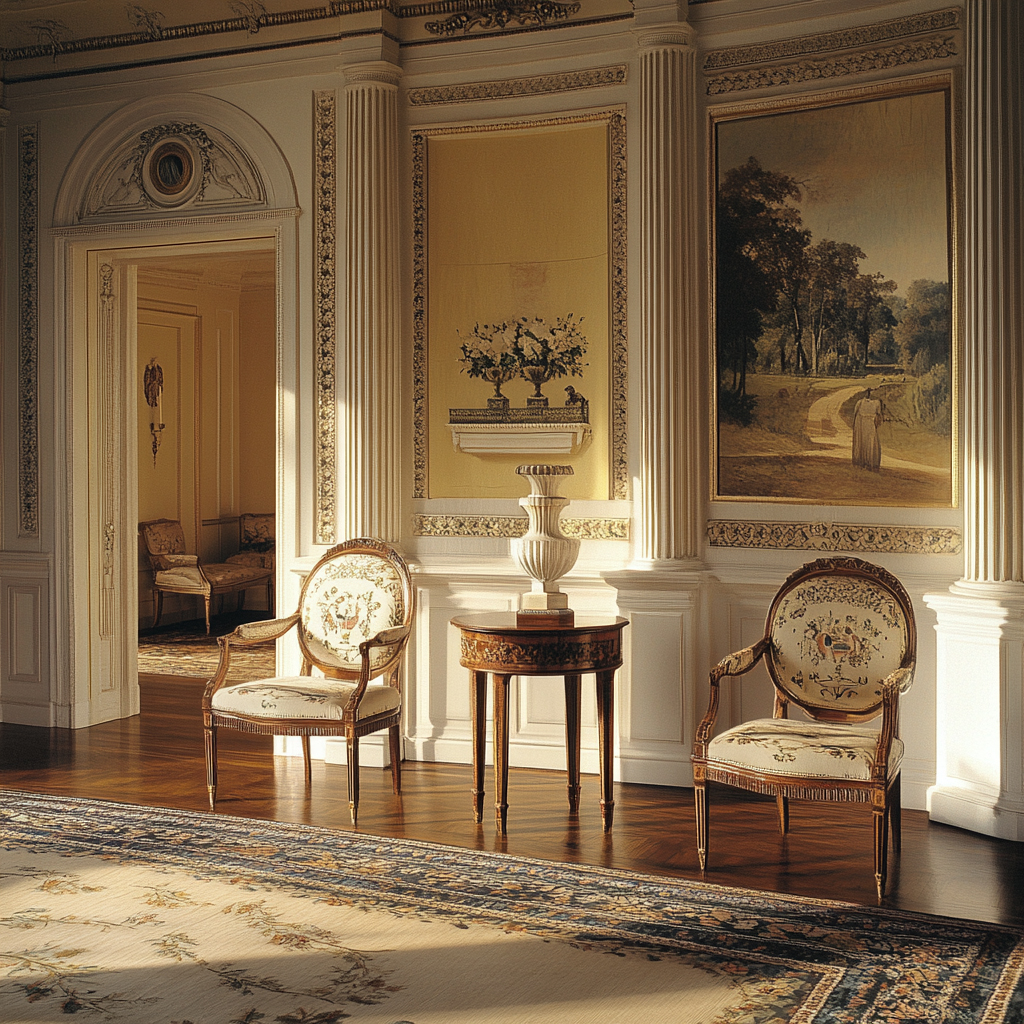
Furniture and decorative arts play a critical supporting role in Adam Style interiors, reinforcing the architectural elegance and refined Neoclassical language of the space. Rather than dominating a room, furnishings are designed to harmonize with the architecture, echoing its proportions, ornament, and sense of balance.
• Furniture forms associated with the Hepplewhite, Chippendale, and Sheraton traditions are particularly well suited to Adam interiors. These styles emphasize lightness, graceful silhouettes, tapered legs, and delicate carving—qualities that align closely with Adam’s architectural ideals.
• Classical motifs are frequently incorporated into chairs, tables, sideboards, and cabinets. Common decorative elements include lyres, urns, anthemion patterns, sheaves of wheat, husks, rosettes, and floral garlands—each symbolically rooted in classical antiquity and scaled with restraint.
• Refined surface treatments further elevate these pieces. Inlaid woods such as satinwood, mahogany, and rosewood introduce contrast and craftsmanship, while painted details, japanning, and selectively applied gilding add visual interest without overwhelming the form.
Decorative arts—including mirrors, lighting, clocks, metalwork, and textiles—extend this classical vocabulary throughout the interior. Together, furniture and decorative objects contribute to a cohesive environment in which every element supports the architectural composition, resulting in interiors that feel elegant, harmonious, and timeless.
Color Palette & Textures
Color and surface treatment are central to the identity of Adam Style interiors. Rather than relying on bold contrast or heavy saturation, the palette is intentionally light and harmonious, designed to enhance architectural form and ornament without overpowering it.
• Soft pastel hues dominate, including powder blue, celadon and pale sage green, soft lilac, muted coral, warm stone, and creamy off-white. These colors were historically inspired by classical frescoes and archaeological discoveries in Pompeii and Herculaneum, and they contribute to the airy, refined atmosphere that defines Adam interiors.
• Refined, smooth textures are essential to the style. Walls are typically finished in finely polished plaster or smoothly painted surfaces, allowing delicate ornament and shadow lines to remain crisp. Floors often feature polished wood or stone, softened by area rugs woven with classical borders, geometric patterns, or stylized floral motifs.
• Luxurious textiles provide warmth and visual richness while maintaining elegance. Fabrics such as silk, brocade, damask, and fine wool are commonly used for draperies, upholstery, cushions, and occasionally wall coverings. These materials often feature restrained classical patterns—stripes, urns, medallions, or botanical motifs—echoing the architectural language of the room.
Together, this carefully controlled palette of color and texture creates interiors that feel luminous, balanced, and timeless. Every surface is treated as part of a unified composition, reinforcing Adam’s belief that architecture, decoration, and color must work together in harmony.
The Enduring Appeal of Robert Adam’s Style
The Robert Adam style remains a symbol of refined elegance and classical beauty, cherished by those who appreciate historic interiors, fine detailing, and harmonious design. Whether in grand estate homes, stately townhouses, or modern reinterpretations, the Adam aesthetic continues to inspire designers seeking a balance of grandeur and grace.
By seamlessly blending historical influence with artistic innovation, Robert Adam’s work stands as one of the most celebrated legacies in architectural and interior design history—a timeless approach to classical beauty that still captivates today.
Elements of Adam Style
Architectural Features
- Curvilinear Forms: Ovals and curves appear in room layouts, ceilings, and decorative motifs.
- Stucco Reliefs & Plasterwork: Delicate friezes, medallions, and garlands embellish walls and ceilings.
- Symmetry with Fluidity: Unlike rigid Georgian styles, Adam’s design integrates soft curves and organic flow.
- Classical Columns & Pilasters: Incorporates Corinthian and Ionic elements to frame architectural spaces.
Decorative Ornamentation
- Classical Details: Swags, ribbons, urns, lyres, and floral motifs enrich walls and furniture.
- Eclectic Influences: Combines Greek, Roman, and Etruscan art with Baroque and Byzantine elements.
- Painted Ceilings: Mythological themes, geometric patterns, and floral motifs define ceiling designs.
- Decorative Fireplaces: Elaborate mantels feature carved or painted neoclassical motifs.
Furniture & Decorative Arts
- Signature Styles: Adam’s interiors pair beautifully with Hepplewhite, Chippendale, and Sheraton furniture.
- Classical Motifs in Furniture: Designs include lyres, urns, sheaves of wheat, and floral garlands.
- Refined Finishes: Gilded accents, inlaid woods, and painted neoclassical details enhance furniture pieces.
Color Palette & Textures
- Soft Pastels: Powder blues, pale greens, soft lilacs, corals, and creamy whites dominate.
- Luxurious Fabrics: Upholstery and drapery use silk, brocade, and damask.
- Polished Surfaces: Smooth textures, parquet wood floors, and fine area rugs define the look.
Lighting & Accessories
- Classical Chandeliers & Sconces: Brass, gilded, or glass chandeliers illuminate interiors.
- Decorative Mirrors: Gilded, oval, or neoclassical mirrors enhance light and depth.
- Ornamental Screens & Panels: Hand-painted folding screens add elegance to rooms.
- Marble & Gilded Accents: Classical columns, sculptures, and gilded moldings complete the aesthetic.
Exterior Architectural Features
- Graceful Facades: Adam-style exteriors maintain symmetry with ornate detailing.
- Decorative Ironwork: Elegant wrought iron balconies and stair railings.
- Engraved Friezes & Cornices: Carved reliefs and arched windows reflect Roman influences.
Blending Traditional and Contemporary Design
Stucco Veneziano - Venetian Plaster!
Inspired by the ornate plaster-work of Renaissance Italy, decorative plaster has a millennial history, with origins dating back to the Rome of the Caesars and in the art of Ancient Greece.
It was Andrea Palladio, a famous Italian architect, who in the XVI century re-discovered it through his studies and re-proposed it in the splendid Venetian villas that are still to this day the distinguishing mark of his career. Stucco Veneziano is an aesthetic solution that step by step, conquered Venice and Lombardy, then Italy, and finally entire Europe in the XVII century. Today, venetian plaster Stucco Veneziano restores the splendor of a classic and prestigious finish.
Rose Peach Glaze Pre-tinted glazing liquid
For decorative effects and faux finishing.
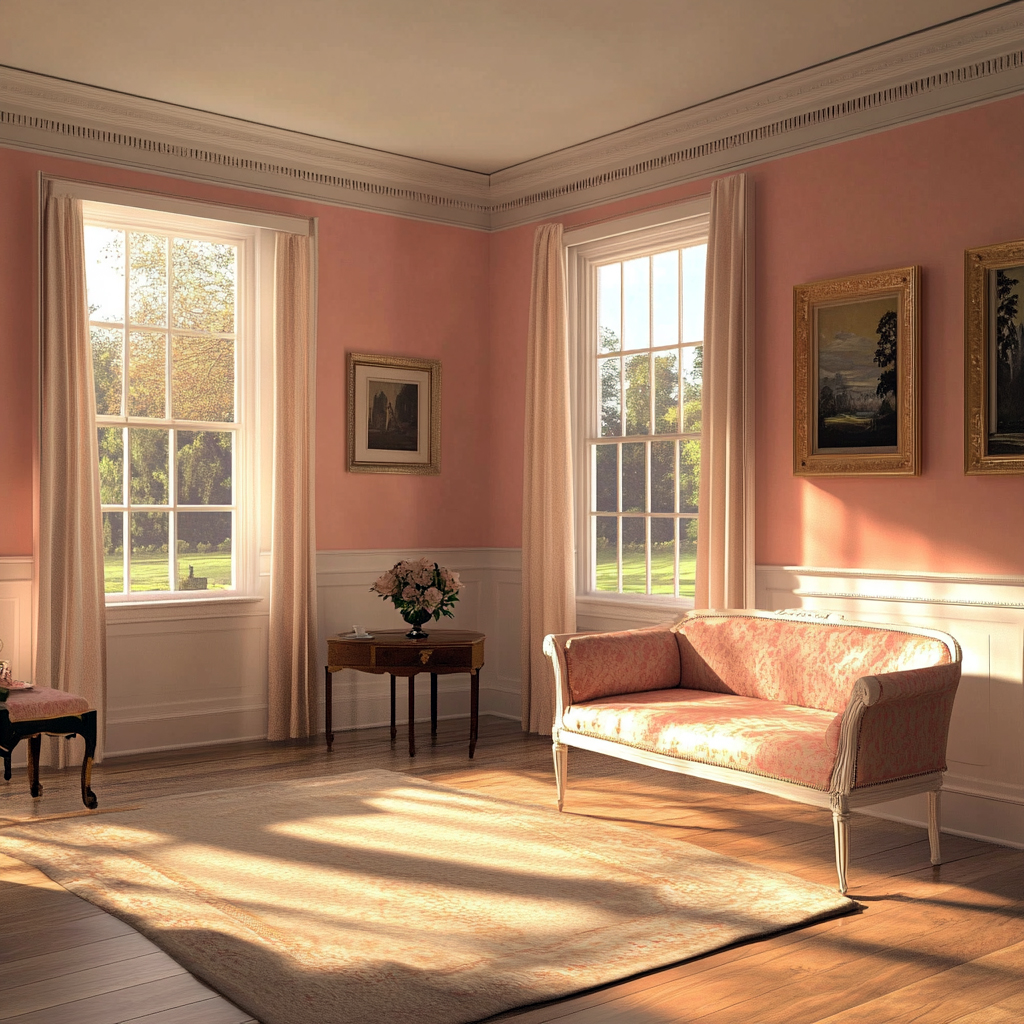
Velur Glaze in a Rose Peach color brings a refined warmth and delicate elegance to interiors, making it an ideal choice for Federal, Colonial, and Early American-style homes. Designed for a soft color wash effect, this pre-mixed glaze enhances walls with a subtle, timeworn patina, reminiscent of historic plaster finishes found in grand estates and early American residences. Whether applied lightly for a gentle, aged glow or layered for a richer, more dimensional look, Rose Peach Velur Glaze creates an inviting, handcrafted aesthetic. Perfect for parlors, dining rooms, and historic restorations, this glaze adds warmth, sophistication, and period-authentic charm to any space.
Learn more and BUY now!
Lithos Venetian Plaster
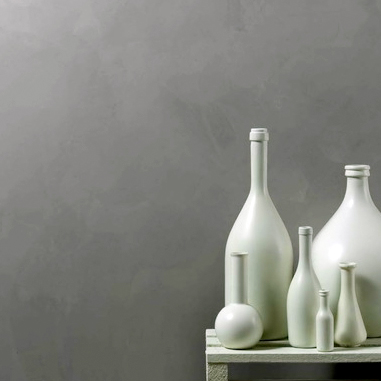
Finishing Venetian Plaster with natural polished marble effect
Lithos is the contemporary version of the famous ancient Stucco Veneziano. It is a beautiful and highly refined decorative finish for hotels, offices, shops, exhibition halls, living rooms, etc. Ideal for all types of interior surfaces such as cement renders, Gypsum plasters, prefabricated panels wood and its by-products, as long as sufficiently smooth. With the range of colours and the applicator’s capacity and inspiration, it is possible to attain a variety of designs and chromatic effects. The resulting coating, in addition to being highly attractive, is abrasion resistant and washable.
Spread rate: 35 to 45 sq. ft. per quart.
0.8 - 1.0 kg/m² (for a recommended dry film thickness of 1,0 mm)
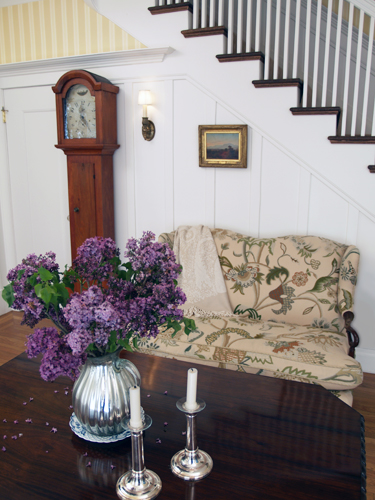
Early American Style
Colonial Amercians drew inspriation from their European heritage. Curent design styles would filter across the ocean and become reinventedin early America. Proportion and scale took reign over ornementation, A neutral color palette of grey blue, greens and rose pinks is readily apparent.
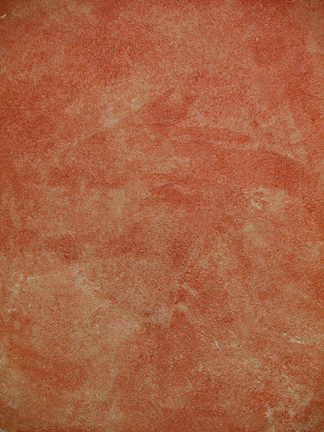
Stucco Rustico - Aged Plaster
Stucco Rustico is a Traditional interior and exterior textured plaster that epitomizes the rustic old world charm commonly associated with Tuscan environments. I love this treatment for its ease of application and the natural, organic glazed appearance that results when using mineral based plasters and glazes. Whether a rough application or a smooth finish, this treatment holds true to the test of time and, in fact, feels as if time itself stopped to wash the walls personally.
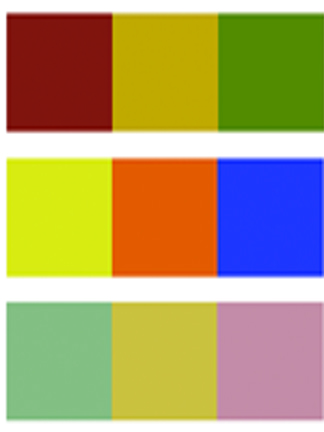
The Rustic Color Palette
The Rustic Style color palette falls within a distinct range of color tones and is essential in creating a successful Rustic interior. By using the appropriate color tones you can create a variety of design styles ranging from Period and Historic, regional or thematic. Color helps define our experiences within an interior and exterior environment. It affects us on a physical, emotional, and spiritual level and can be calming and passive, expressive and vital.
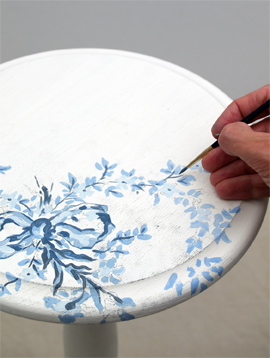
Painted Floral Details
Floral patterns used as accents in fabrics and furniture are common place details in the English Country home. These graceful and organic patterns complement the cozy interior of this style and work particularly well with lace window treatments, an heirloom tea service set and the natural and rustic charm of wooden ceiling beams and slightly irregularly textured walls.