Early American interiors were rarely created for show alone—they evolved through necessity, craftsmanship, and a deep desire to make home a place of warmth and meaning.
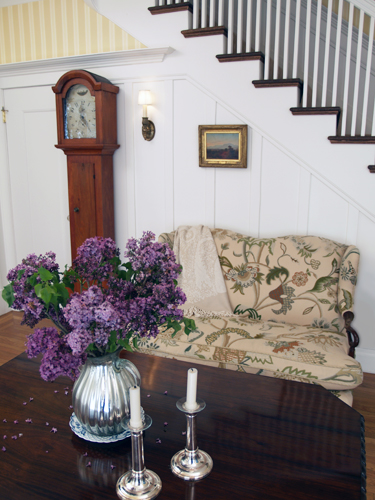
An American tradition of handmade beauty, simple patterns and warm, historic color tones create a charming presence in this informal entryway.
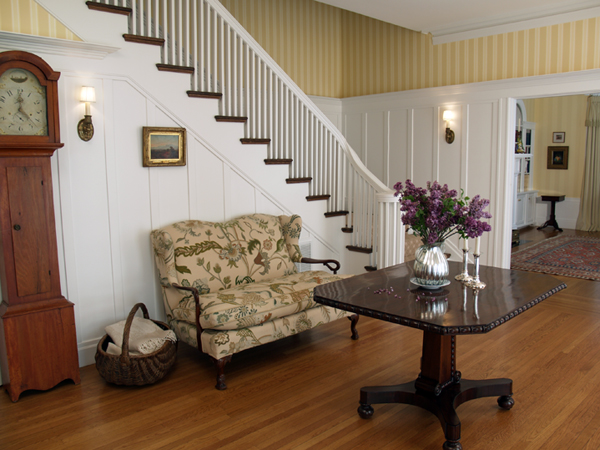
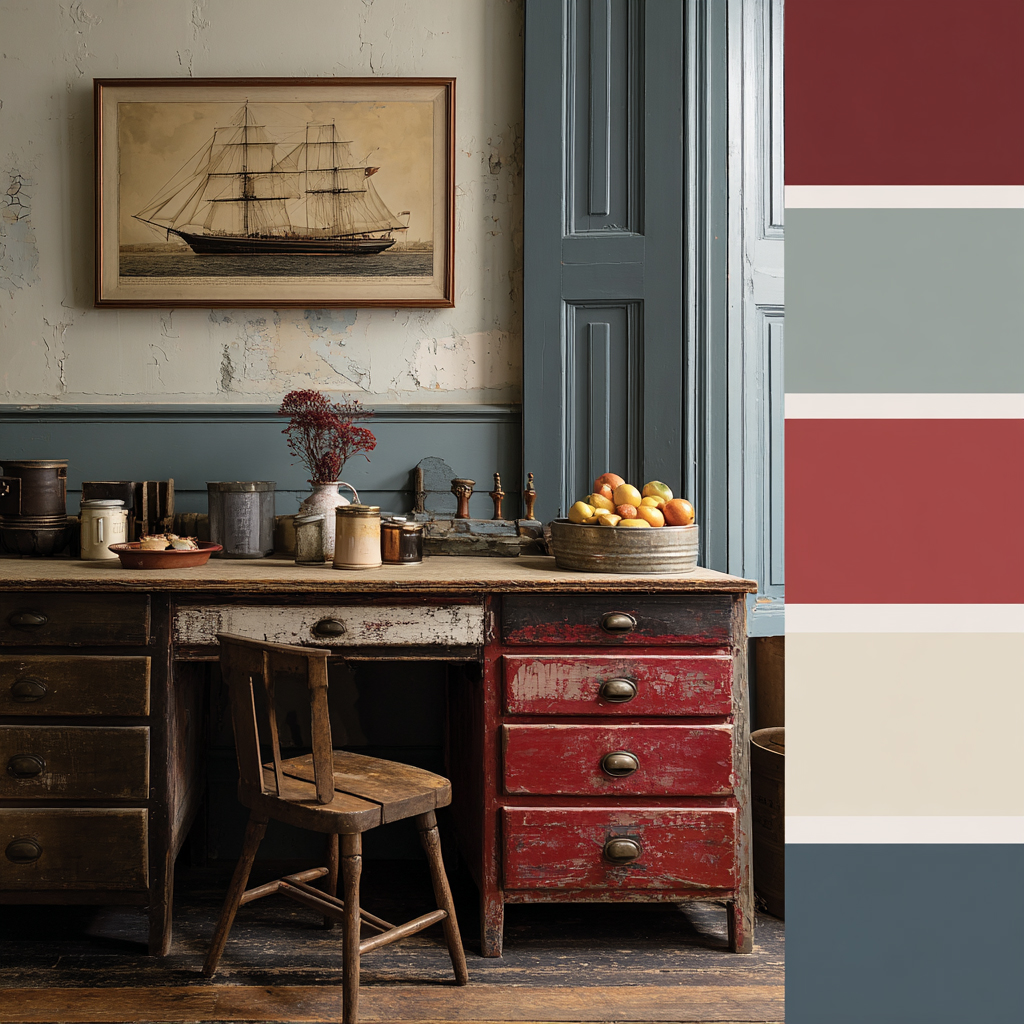
Early American Style interiors have fundamental similarities with many design styles. Color usage and design aesthetics mingle with a strong tradition of handcrafts underling a persistent desire to beautify ones environment in simple, practical ways. These styles often use local or regionally available materials and techniques. There is a lively folk art tradition in Early American style, repeatedly being expressed through painted furniture and objects. For wall surfaces, an Early American historic color palette of muted blues and greens, white washes and pale yellows.
Yet what distinguishes Early American style is its sense of restraint and honest utility. Decorative details were rarely excessive, but instead emerged through the natural qualities of wood, ironwork, woven textiles, and handmade finishes. Rooms were designed for living—cooking, gathering, working, and resting—while still reflecting the pride of the household and the cultural inheritance of the settlers who shaped these environments.
Colonial American’s drew inspiration from their European predecessors. Current design styles would filter across the ocean and become reinvented in early America. Proportion and scale took reign over ornamentation. A neutral color palette of grey blues, greens and rose pinks can be readily seen. Primary colors of red and blue, commonly mixed with white, are in many ways a tribute to new found independence and a direct inspiration from the American flag.
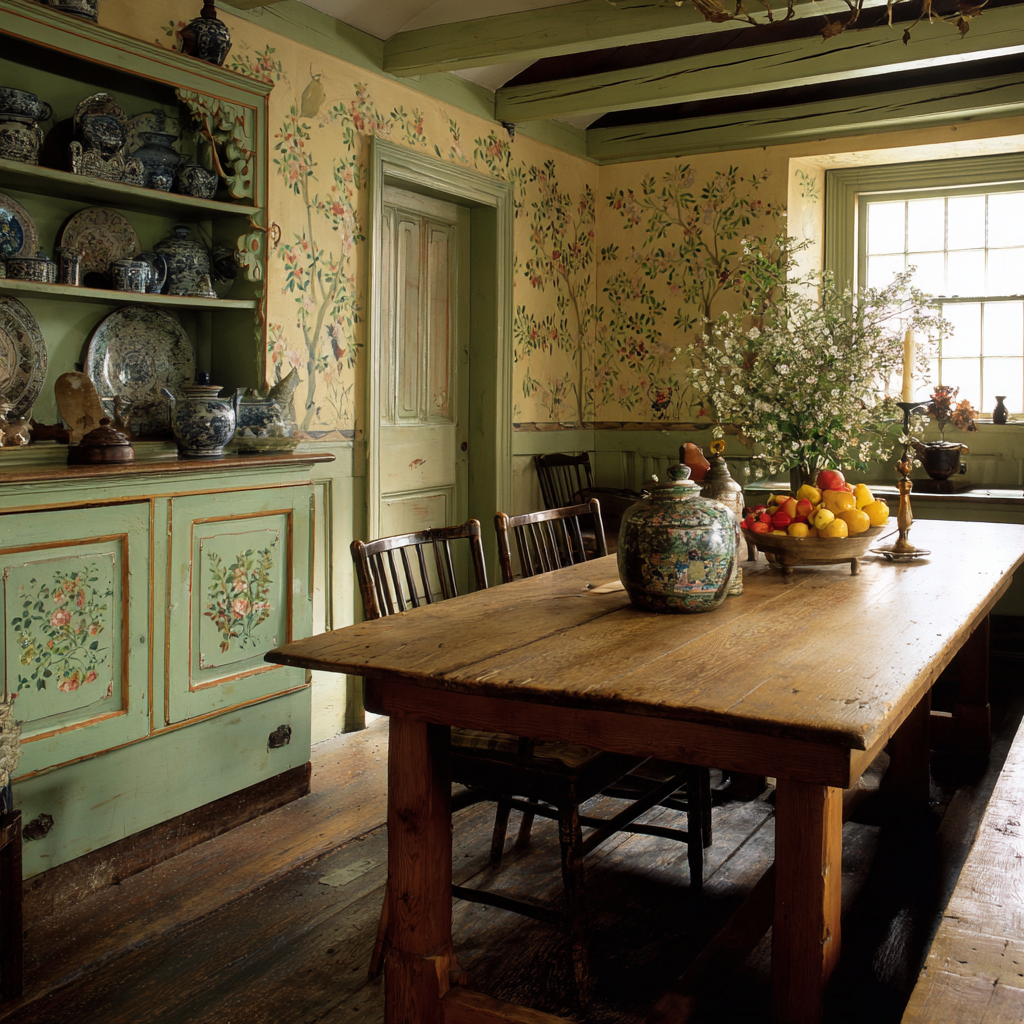
In many homes, paint itself became a decorative language. Simple milk paints, natural pigments, and hand-mixed washes created surfaces that felt soft, matte, and deeply human. Painted chairs, cupboards, and chests often carried subtle striping, stenciling, or floral motifs—humble expressions of artistry within the daily rhythm of domestic life.
For lack of resources many families created their own furniture and decorative objects, developing the charming, if not novice, rustic folk tradition that has become part of our cultural past. These straight forward techniques, and colorful musings are what we strive to achieve in the following pages.
Handcrafted quilts, braided rugs, pewter tableware, and simple ceramics all contribute to the tactile richness of the style. Even the imperfections—slightly uneven brushwork, worn edges, softened finishes—become part of the atmosphere, reminding us that Early American interiors were shaped slowly over time, through use, care, and family tradition.
With the end of the Revolution and the birth of the new republic, Americans looked to ancient Rome for cultural as well as political inspiration. At the same time, newly professionalized American architects sought to express the power and influence of their patrons by creating dignified yet democratic homes.
The result of this political and aesthetic cross-pollination was the Federal style, which soon became identified with the hopes, ideals, and character of the young nation. Where Early American folk interiors were shaped by necessity, Federal style reflected growing stability, refinement, and a rising confidence in the American experiment.
These interiors retained a sense of order and simplicity, but began to incorporate more formal architectural detail, delicate ornament, and a softened elegance that suggested both prosperity and intellectual aspiration.
Ironically, the guiding light of ancient Rome shone on the new republic by way of Old England. Federal period architects like Charles Bulfinch enlivened a somewhat poker-faced Georgian colonial template with classical detail straight out of stylebooks of the Adam brothers, the most renowned architects of the British eighteenth century.
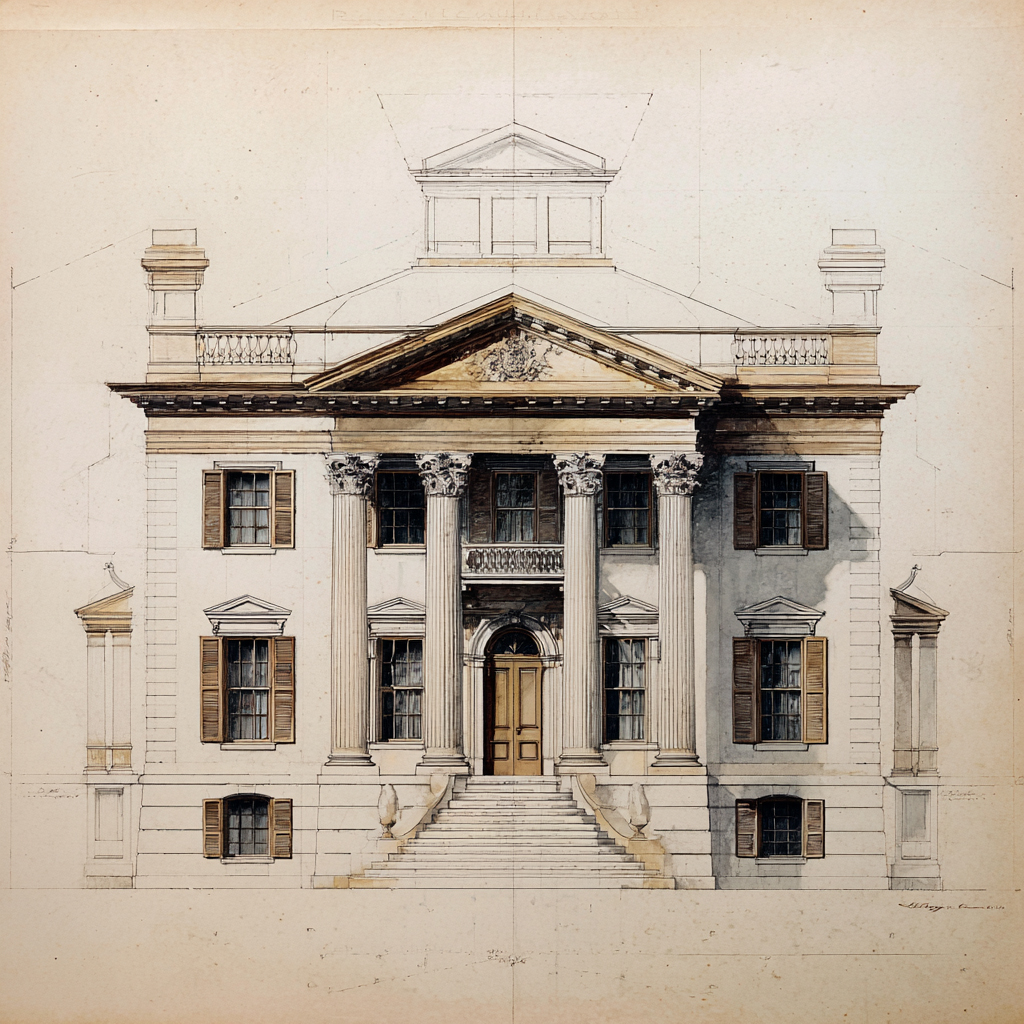
A typical Federal home had pragmatic Georgian bones (symmetrical brick facade, balanced rows of windows around a central door) adorned with graceful Adamesque flourishes. A semicircular fanlight over the front door, arched three-part Palladian windows, dentil moldings or a balustrade around the roof all served to soften square Georgian lines.
The centrally placed front entryway was the focal point, with the door flanked by sidelights, pilasters, or slender columns and possibly topped by a small portico. Inside, plasterwork, refined mantels, and carefully proportioned rooms created an atmosphere of calm dignity, offering a new architectural vocabulary for the American home.
Federal interiors were still rooted in restraint, but the emphasis shifted toward elegance, symmetry, and decorative refinement—an evolution from rural handmade charm toward an emerging national sophistication.
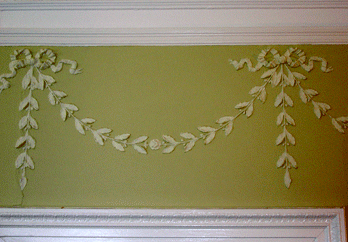
To create a convincing Federal setting, use a judicious mix of homespun American colonial furniture and more refined Adam-style pieces (Chippendale, Hepplewhite, Sheraton).
Pewter and Silver, luxurious but understated textures -- cream-colored damask, polished wood floors -- suggest the optimism and increasing prosperity of the new nation. Decorative objects were chosen carefully: a gilded mirror, a graceful sideboard, or a classical urn could quietly elevate the room without overwhelming its simplicity.
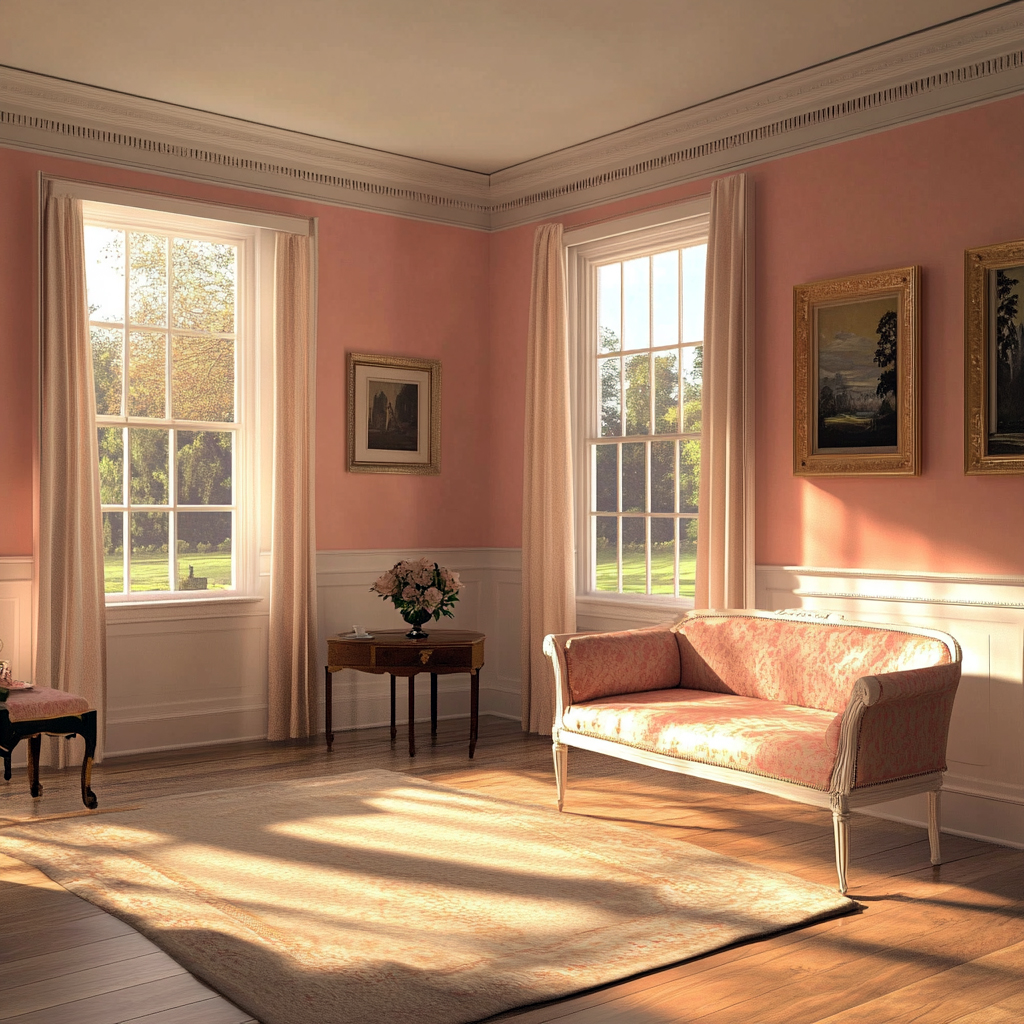
Colors should be light and delicate: powder blue, cream, yellow, soft pink and muted rose. These tones reflect the Federal taste for airiness and proportion, offering interiors that feel both formal and inviting.
Of course, the quintessential Federal detail is the American eagle, soaring above the mantelpiece. And while some might consider a plaster bust of George Washington to be a bit over the top, for the true neo-Federalist it will add just the right patriotic touch.
Ultimately, Early American and Federal style together form the foundation of a distinctly American interior tradition—one that balances handmade warmth with emerging refinement, and continues to inspire spaces of comfort, heritage, and enduring character.

Using color at home or in the office - for paintings, furniture or any artistic challenge - takes a good eye, a little know how, and a creative imagination. Create custom color schemes and color effects in your home or office. Learn how to use the best base color, create a glaze, mixing colors, and more.
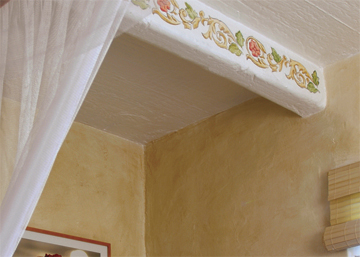
The charm of painted scrolls on ceiling beams needs no introduction. This decorative accent is a delightful addition to any room. And though beams are common elements in many interiors rarely do one see them used as a focal point for decorative applications. Whether you enjoy the old world charm of Italy, or the contemporary flair of a San Francisco loft space, these tech iques can be adapted to suit the most creative inspiration.
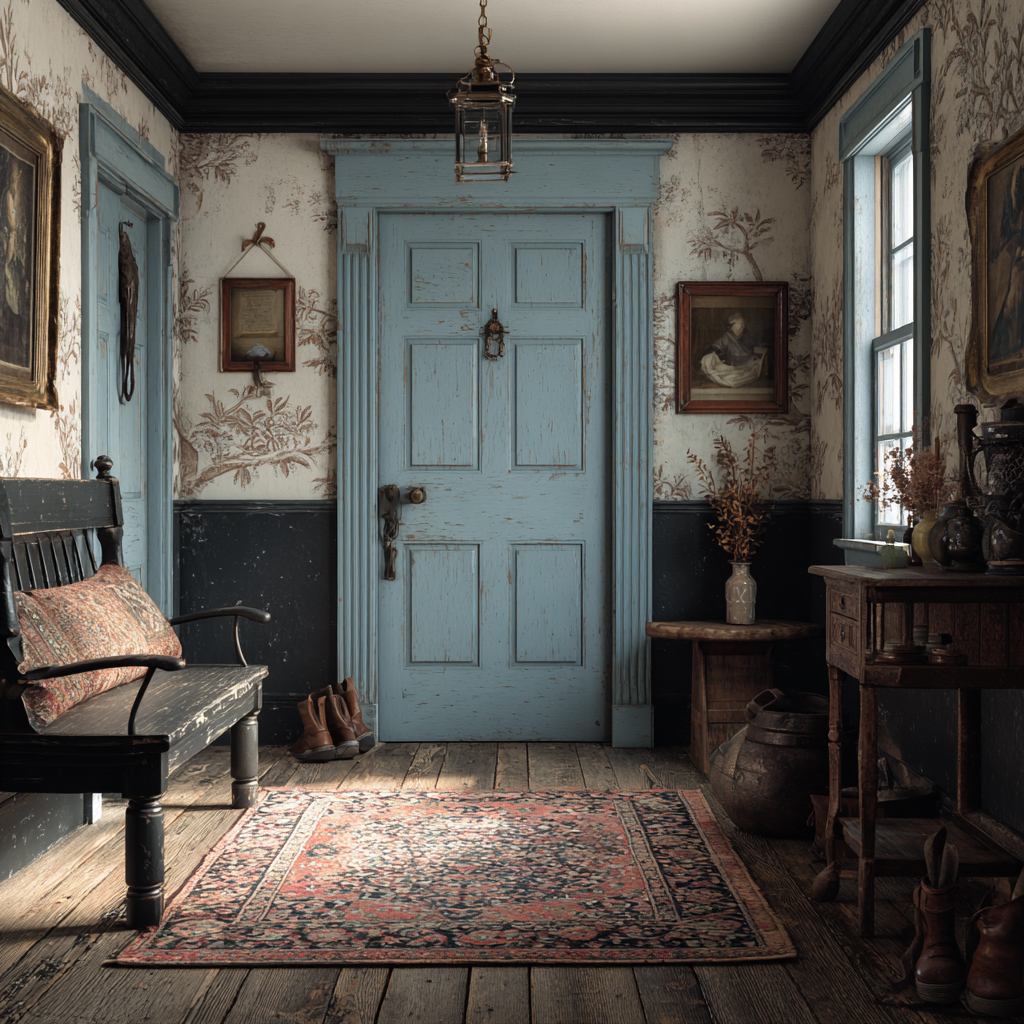
Early American entryway and folk interior
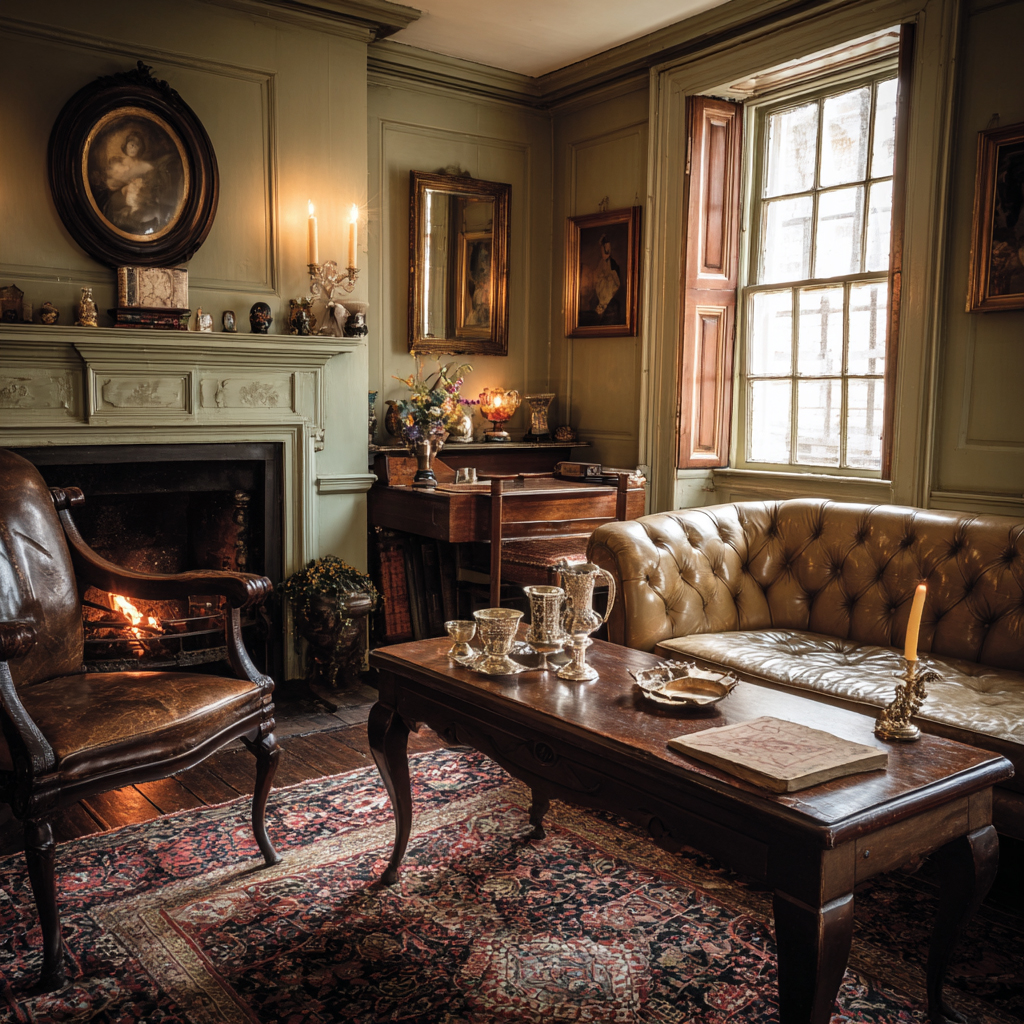
Colonial handmade furniture and rustic simplicity
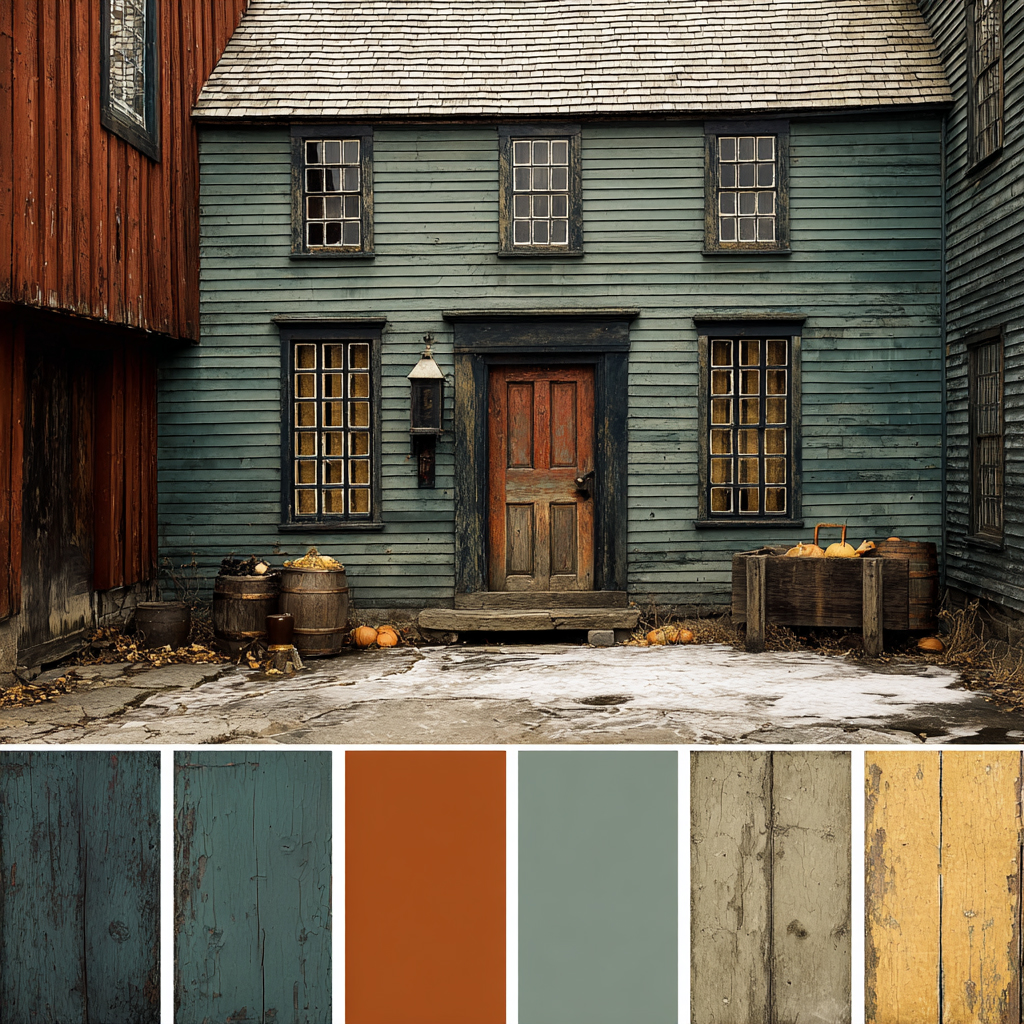
Early American muted historic color palette
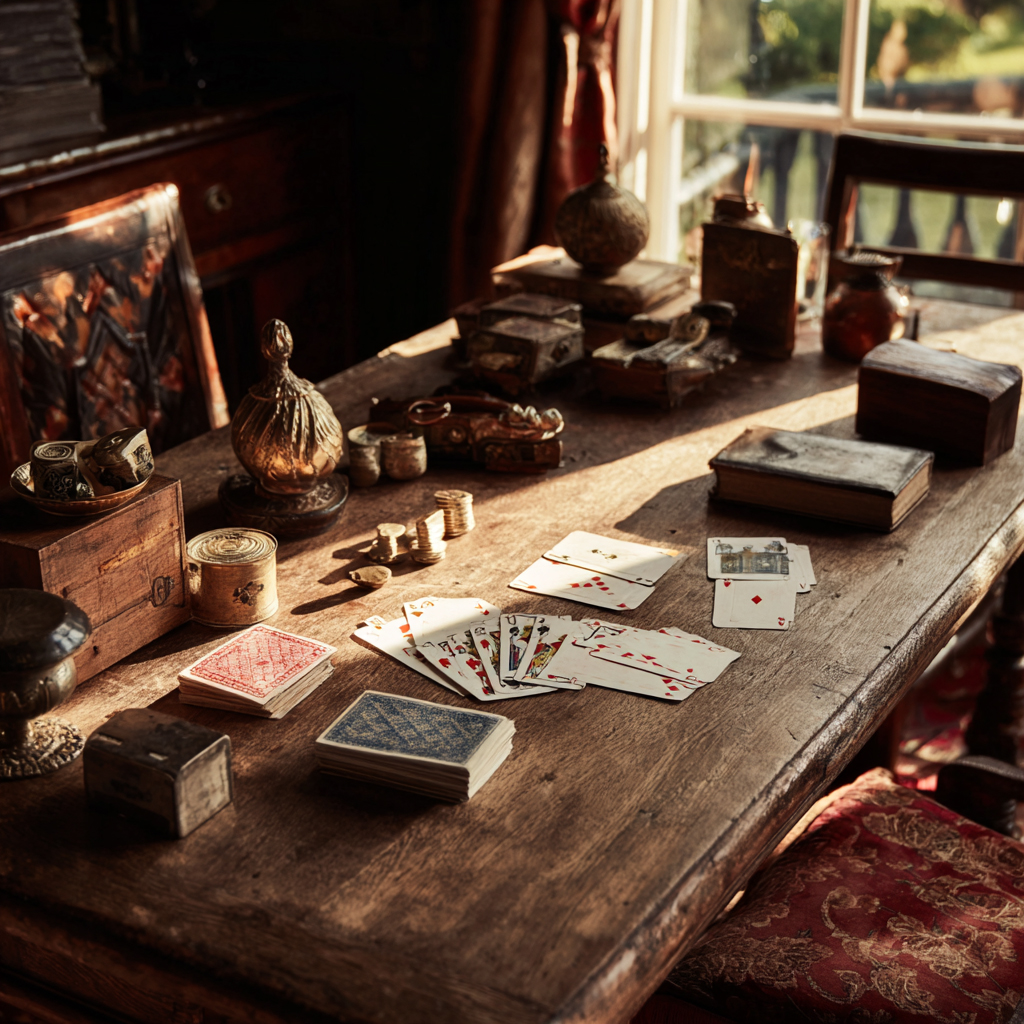
Painted folk art furniture and decorative objects
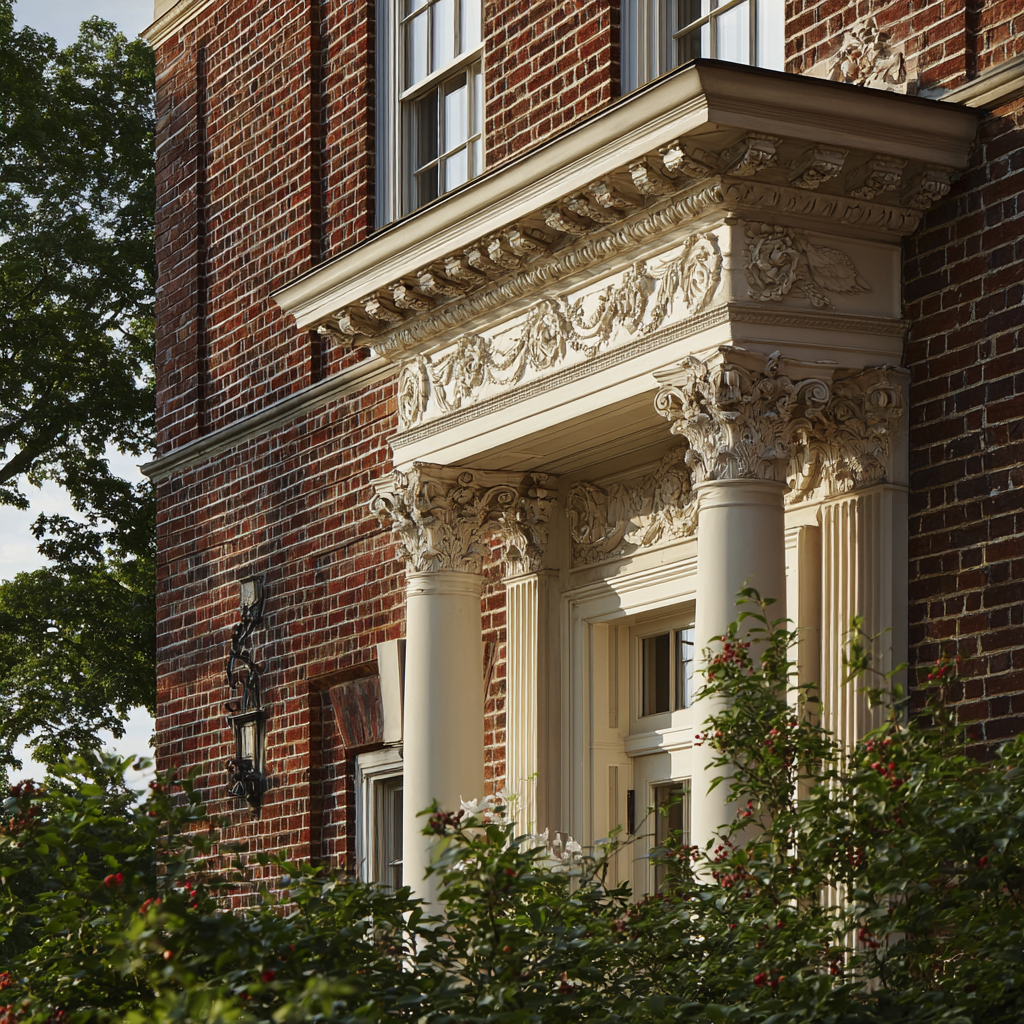
Federal style details and early American refinement
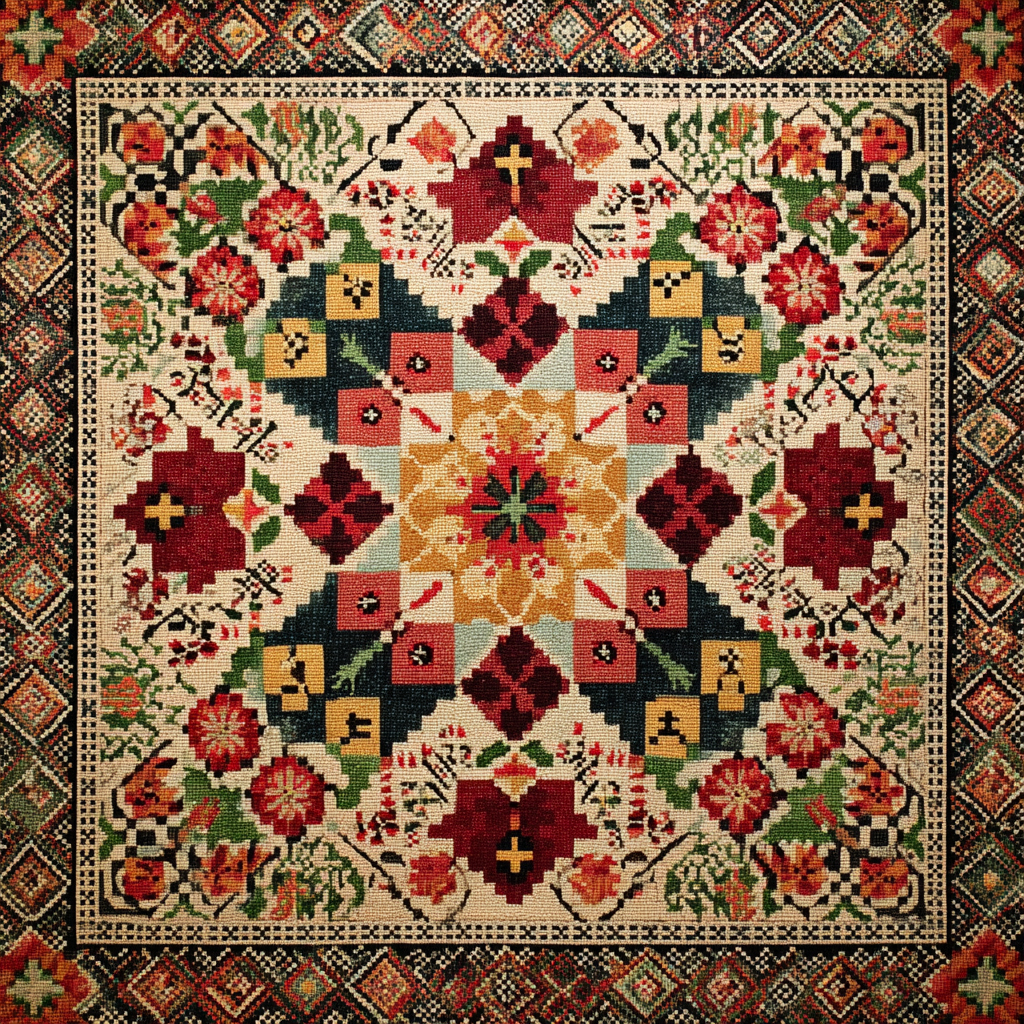
Early American textiles quilts and woven tradition
Early American interiors celebrate the beauty of honest materials. Wide plank floors, hand-built furniture, and simple painted surfaces create spaces that feel personal, practical, and deeply inviting.
The charm lies in restraint — a quiet balance of function and folk artistry, shaped over time through daily living.
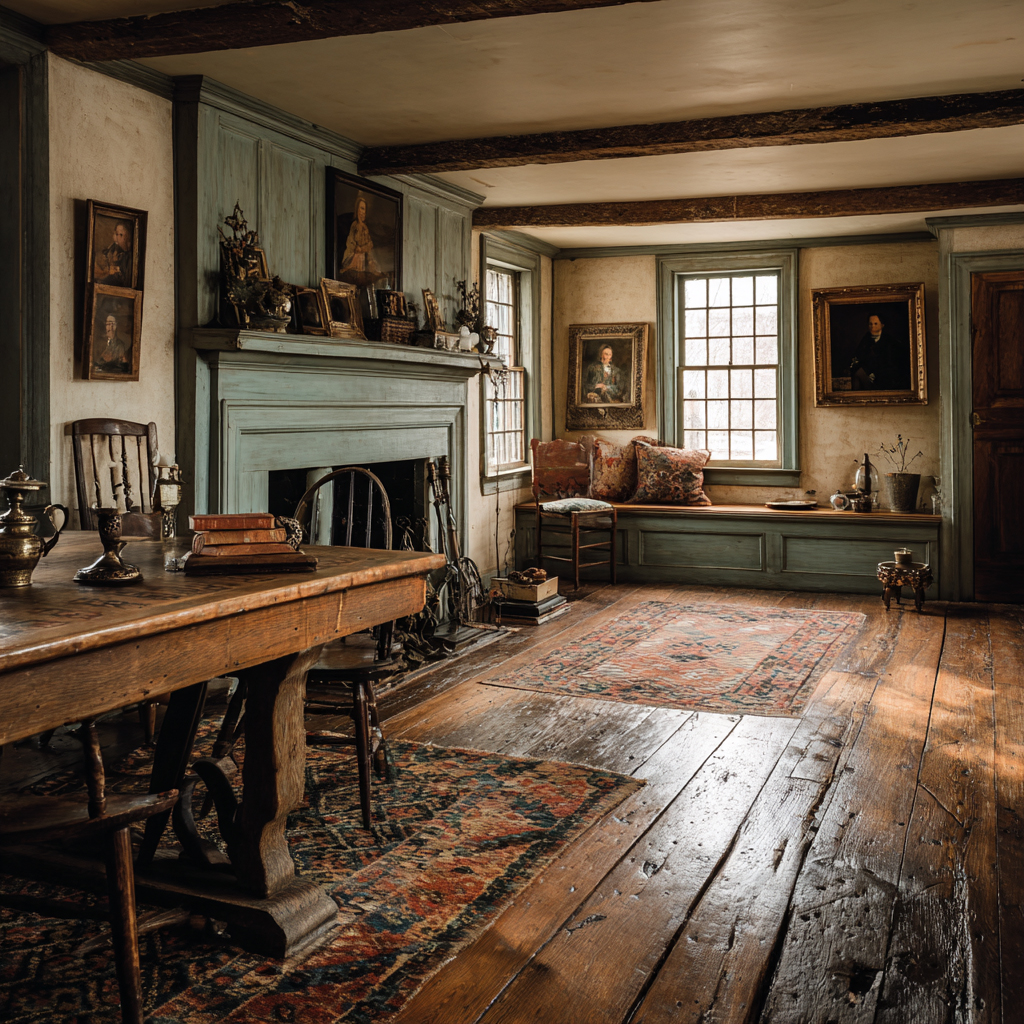
Muted blues, weathered greens, soft cream tones and brick reds form the historic palette of the Early American home. Painted furniture, stenciled borders, and handmade textiles add gentle pattern and story.
These surfaces were never meant to be perfect — they were meant to be lived with.
As the new republic matured, Early American simplicity began to mingle with the refined proportions of Federal style. Classical symmetry, delicate plaster details, and lighter color tones introduced a sense of grace without losing the handmade American spirit.
Together, these traditions form the foundation of a timeless interior style — warm, historic, and unmistakably American.
Velur Glaze in a Rose Peach color brings a refined warmth and delicate elegance to interiors, making it an ideal choice for Federal, Colonial, and Early American-style homes. Designed for a soft color wash effect, this pre-mixed glaze enhances walls with a subtle, timeworn patina, reminiscent of historic plaster finishes found in grand estates and early American residences. Whether applied lightly for a gentle, aged glow or layered for a richer, more dimensional look, Rose Peach Velur Glaze creates an inviting, handcrafted aesthetic. Perfect for parlors, dining rooms, and historic restorations, this glaze adds warmth, sophistication, and period-authentic charm to any space.
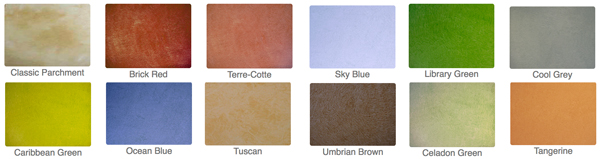
Colonial Amercians drew inspriation from their European heritage. Curent design styles would filter across the ocean and become reinventedin early America. Proportion and scale took reign over ornementation, A neutral color palette of grey blue, greens and rose pinks is readily apparent.
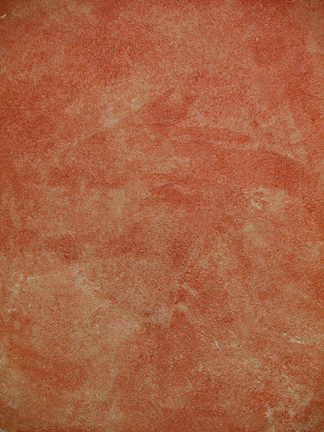
Stucco Rustico is a Traditional interior and exterior textured plaster that epitomizes the rustic old world charm commonly associated with Tuscan environments. I love this treatment for its ease of application and the natural, organic glazed appearance that results when using mineral based plasters and glazes. Whether a rough application or a smooth finish, this treatment holds true to the test of time and, in fact, feels as if time itself stopped to wash the walls personally.

The Rustic Style color palette falls within a distinct range of color tones and is essential in creating a successful Rustic interior. By using the appropriate color tones you can create a variety of design styles ranging from Period and Historic, regional or thematic. Color helps define our experiences within an interior and exterior environment. It affects us on a physical, emotional, and spiritual level and can be calming and passive, expressive and vital.
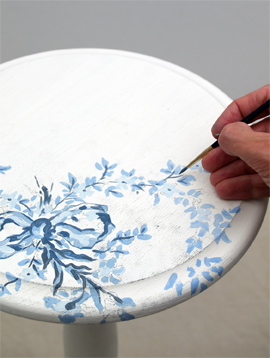
Floral patterns used as accents in fabrics and furniture are common place details in the English Country home. These graceful and organic patterns complement the cozy interior of this style and work particularly well with lace window treatments, an heirloom tea service set and the natural and rustic charm of wooden ceiling beams and slightly irregularly textured walls.