
Bungalow Style
"When you see a cozy one storied dwelling, with low-pitched roof and very wide eaves, lots of windows and an outside chimney of cobble or clinker-brick half hidden by clinging vines -- that is a bungalow, whatever other houses may be." - (Sunset Magazine, Jan.1913)
In the early twentieth century, the modest, welcoming bungalow represented a democratic vision of exceptional home design. Built with wide, open front porches and small shared yards, bungalows turned outward toward their surrounding communities. Indigenous materials, open floor plans and horizontal lines created harmony with the natural landscape.
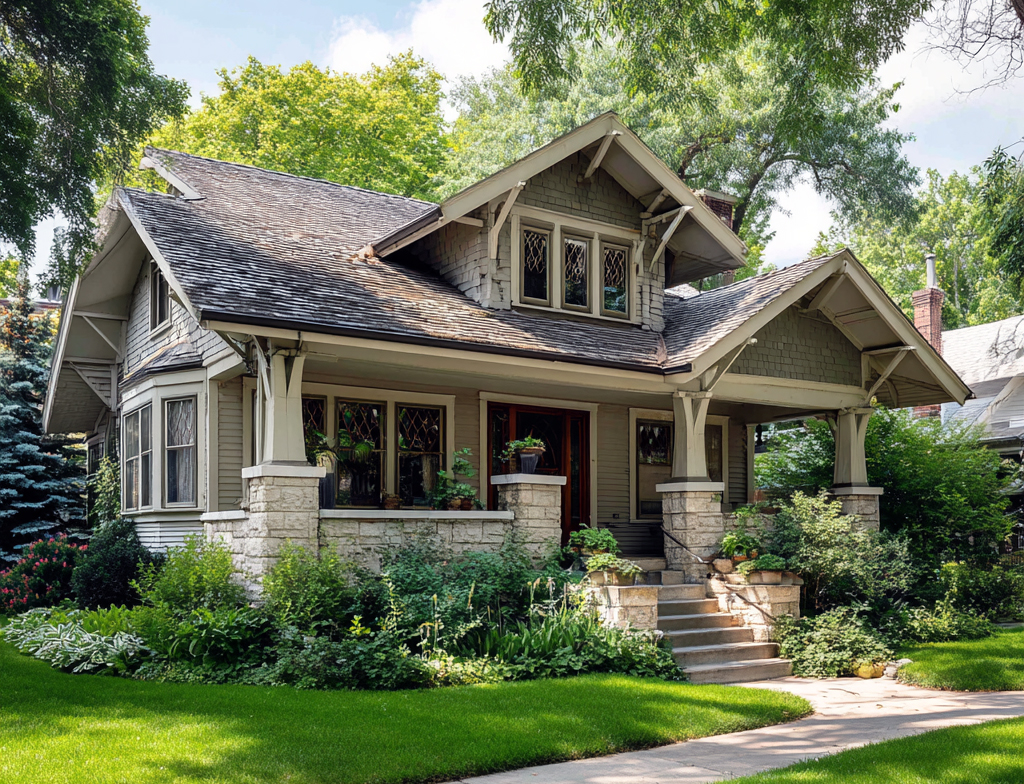
After the fussy, parsed spaces of the Victorian house, the bungalow was an architectural revolution. Dealers in bungalow kits like Sears made professionally-designed homes widely available. Sophisticated design, the integrity of natural materials, and an easygoing style were the driving forces behind the movement.
 Decorative patterns were often created using the exterior shingles as an unique design element.
Like the Arts and Crafts and Mission schools that influenced it, Bungalow style emphasizes artisanship, local materials, and rustic detail. Everything feels intentionally made—built-ins that look as if they grew out of the house, honest joinery, and wood left warm and visible rather than hidden under glossy finishes. Asian influences are common, particularly in the California bungalows of Greene and Greene, where delicately proportioned beams, lattice-like screens, and quiet, horizontal lines echo Japanese and Chinese traditions without ever becoming fussy.
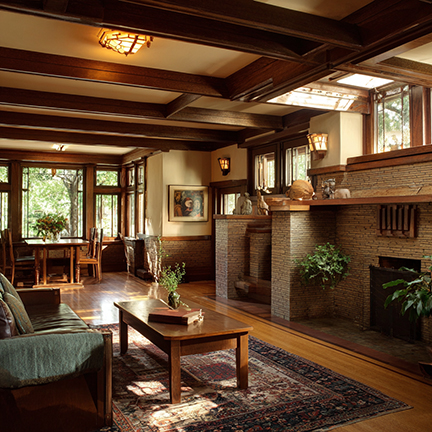
Informality and openness are key features of the interior space. Rooms flow into one another, linked by wide cased openings, low bookcases, and half walls that define space without closing it off. Many bungalows replace the formal dining room with a breakfast nook—tucked into a bay window or beside the kitchen—often with a built-in bench, a sturdy table, and art-glass windows that turn morning light into color. There is usually no front hall, and instead of a long corridor, you step directly into the life of the house. The rough stone or brick fireplace provides the focus for the living space, anchoring the room with a broad hearth, substantial wood trim, and the quiet sense that the best conversations happen right here.
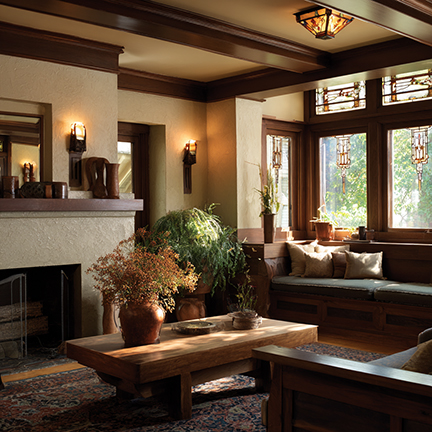
Today’s bungalows continue a living, eclectic design tradition—one that evolves gently without losing sight of its origins. Wall sconces cast a warm, domestic glow, while art glass and carefully placed stenciled decoration draw attention to the craftsmanship already present in the architecture. These details do not compete with the structure; they reveal it, highlighting wainscoting worn smooth by time, box-beam ceilings that emphasize the home’s horizontal lines, and wide wood moldings that frame the fireplace like a piece of functional sculpture.
The palette remains restrained and grounded. Quiet greens, soft creams, and muted mustard tones create a calm backdrop that allows natural materials to speak for themselves. Wood, stone, terra cotta, and brick are not treated as accents but as essential elements of the design. Abundant natural light and the thoughtful treatment of the garden as an “exterior room” dissolve the boundary between inside and out, extending the living space onto porches, patios, and shaded corners of the yard. Craft is made visible everywhere—in mortise-and-tenon furniture, hand-hammered copper fixtures, and built-in benches and bookcases that feel permanent, useful, and quietly beautiful.
Antiquing Video Tutorial
Turn ordinary objects into heirlooms! Creating the 'Classic Antique' glaze finish for objects, furniture, walls and more. This detailed step-by-step tutorial shows how to mix the right colors to create the perfect antiquing solution for any object, furniture, picture frame and more.
Elements of Bungalow Style
Rustic earth tones
Vibrant, colorful patterns underlie this design style.
Feature tutorial.
The Parchment colorwash. Creating the impression of aged walls, the Parchment finish evokes a feeling of history and old world charm. The color density varies over the finished surface and creates appearances of lightly mottled parchment. A soft and airy finish, the Parchment glaze is an ideal way to create mood and character in any room. I’ve found it to be an ideal solution for finishing irregular or textured wall surfaces.
Cabinets
built-in shelves or hutches; details like mullioned doors, beveled glass. (Bungalows in California tend to use redwood, while Midwestern and east coast Craftsman houses use more oak.)
Fireplaces
stone or brick with wide wood molding on the sides, a mantel above, a beveled glass mirror. Decorative tile around the edges. An over mantel rustic landscape or scenic tiles.
Furniture
built-in benches, breakfast nooks. Mahogany with mortise-and-tenon and peg construction, inlaid tiles, green marble.
Lighting
Craftsman lights on either side of mantel. Prairie style lamps with leaded glass panels, brass base. Simple hanging globe fixtures in inglenook. Hand-hammered copper candlesticks.
Windows
Lots of windows for natural light; many-paned windows, particularly large lower panes and small upper panes; stained glass with Arts and Crafts designs.
Floors
wood, tile or stone.
Ceilings
beams, log accents.
Walls
wainscoting, stenciling, muted cream, yellow, sage. Fieldstone, brick.
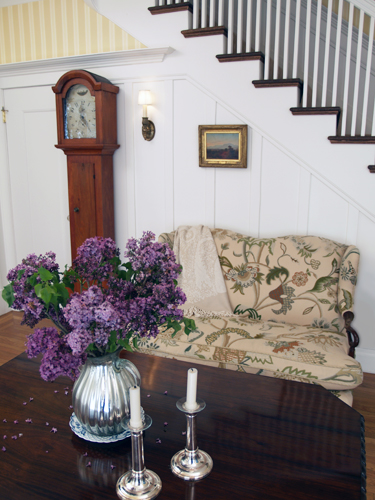
Early American Style
Colonial Amercians drew inspriation from their European heritage. Curent design styles would filter across the ocean and become reinventedin early America. Proportion and scale took reign over ornementation, A neutral color palette of grey blue, greens and rose pinks is readily apparent.
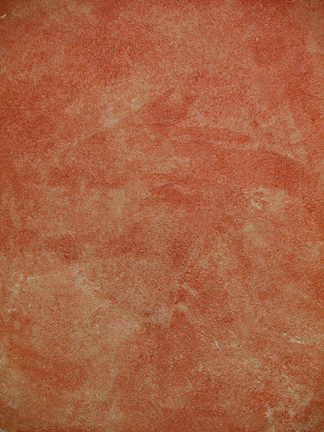
Stucco Rustico - Aged Plaster
Stucco Rustico is a Traditional interior and exterior textured plaster that epitomizes the rustic old world charm commonly associated with Tuscan environments. I love this treatment for its ease of application and the natural, organic glazed appearance that results when using mineral based plasters and glazes. Whether a rough application or a smooth finish, this treatment holds true to the test of time and, in fact, feels as if time itself stopped to wash the walls personally.
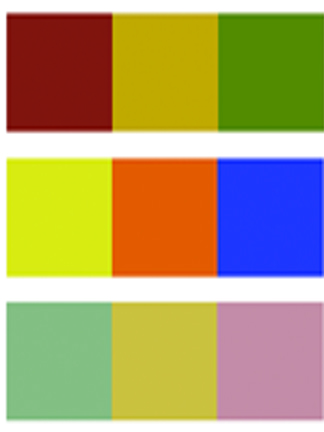
The Rustic Color Palette
The Rustic Style color palette falls within a distinct range of color tones and is essential in creating a successful Rustic interior. By using the appropriate color tones you can create a variety of design styles ranging from Period and Historic, regional or thematic. Color helps define our experiences within an interior and exterior environment. It affects us on a physical, emotional, and spiritual level and can be calming and passive, expressive and vital.
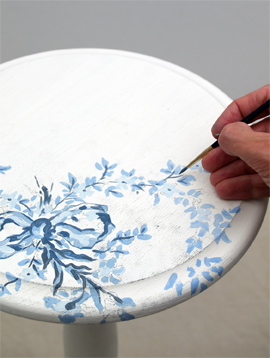
Painted Floral Details
Floral patterns used as accents in fabrics and furniture are common place details in the English Country home. These graceful and organic patterns complement the cozy interior of this style and work particularly well with lace window treatments, an heirloom tea service set and the natural and rustic charm of wooden ceiling beams and slightly irregularly textured walls.